
Epsom Derby Winners: History, Records, and the Ultimate Classic Test
 Available in US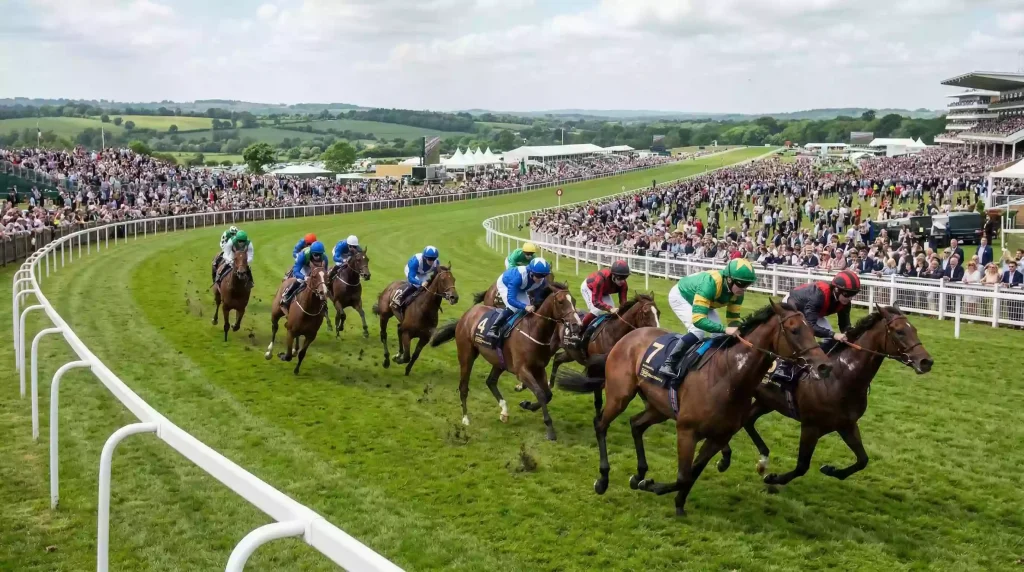
The Epsom Derby is the oldest Classic race in the world, run without interruption (bar wartime relocations) since 1780. More than any other flat race, the Derby defines the three-year-old generation. An Epsom Derby winner enters the record books not just as a horse that won a race, but as the horse that handled the most demanding test in European flat racing — a mile-and-a-half examination of speed, stamina, balance, and temperament on a course that is unlike anything else on the calendar.
That uniqueness is the Derby’s greatest asset and its most persistent controversy. No other Classic is run on such an unconventional track. Some argue this makes the Derby the truest test; others contend that it rewards course specialists over the genuinely best horse. The history of the race supports both positions, depending on which winners you choose to cite.
Epsom Derby Winners — More on this topic at horse race winner.
The Course: Why Epsom Changes Everything
The Derby course at Epsom Downs starts on high ground beyond the stands. The field breaks from the stalls and immediately races uphill for the first half-mile — a climb that saps early speed and discourages front-runners from going too hard too soon. From the top of the hill, the course sweeps left and begins to drop, descending steadily as it rounds Tattenham Corner, a left-handed bend on a pronounced camber that tilts the racing surface towards the inner rail.
Tattenham Corner is where the Derby is often won and lost. Horses on the outside of the group lose ground. Horses that cannot handle the camber drift wide, fighting the gradient rather than using it. Jockeys who commit too early down the hill arrive at the bottom with horses that have used their reserves. The final three and a half furlongs are slightly uphill again, run on a course that continues to drift left, and it is here — with fatigued legs, an uneven surface, and the crowd noise rising — that the true Derby horse separates from the rest.
This is not a conventional track. The undulations, the camber, and the turns demand a particular physical profile: a horse with a low, balanced action, the mental composure to settle on a downhill gradient, and the strength to accelerate uphill in the final stages. Not every horse that wins a Derby is the best of its generation on a flat, galloping track — but every Derby winner has proved it can handle a challenge that most cannot.
Notable Epsom Derby Winners
The Derby’s winners list spans nearly two and a half centuries and includes many of the greatest racehorses ever to compete in Europe.
Nijinsky (1970) won the Derby as part of the last Triple Crown — 2000 Guineas, Derby, St Leger — in the same season. Trained by Vincent O’Brien and ridden by Lester Piggott, Nijinsky’s Derby victory was the centrepiece of a campaign that confirmed him as the dominant horse of his era. The Triple Crown has not been completed since, which speaks to both the difficulty of the feat and the changing priorities of modern training programmes, where stallion values incentivise retirement over continued racing.
Shergar (1981) won by ten lengths — the widest margin in Derby history. His performance was so dominant that the second horse, Glint of Gold, was a future Group 1 winner in his own right. Shergar’s subsequent kidnapping and presumed death in 1983 turned him into a figure of tragedy, but his Derby remains one of the most visually spectacular performances in the race’s history.
Galileo (2001) won the Derby and went on to become the most influential stallion of the twenty-first century. His sons and grandsons have themselves won Derbys, creating a bloodline that dominates European middle-distance racing. Frankel, often cited as the greatest racehorse of the modern era, was a son of Galileo — though Frankel himself never ran at Epsom, being a miler rather than a middle-distance horse.
Lester Piggott won nine Derbys between 1954 and 1983 — a record that defines the jockey’s relationship with Epsom. Piggott understood the course better than any rider of his era, routinely positioning himself to take the inside rail around Tattenham Corner while others drifted wide. His tactical mastery on the Epsom gradients set a standard that modern jockeys still study through race replays.
More recently, Adayar (2021) won the Derby at 16/1 in front of a reduced crowd returning from pandemic restrictions, while Auguste Rodin (2023) survived a troubled passage through Tattenham Corner to win for Aidan O’Brien — giving the Irish trainer a record-equalling ninth Derby victory. Each winner adds to a narrative that stretches back to the reign of George III, and each tells you something about what the race demands.
The Derby as a Form Test
Derby form is treated as premium currency in European racing, but it requires careful interpretation. The unique demands of Epsom mean that a horse’s finishing position in the Derby does not always translate to other tracks. A horse that handles the camber brilliantly may win the Derby and then underperform on flatter courses. Conversely, a horse that finishes fifth or sixth, beaten by the track rather than by the opposition, may prove significantly better when switched to Ascot, York, or the Curragh.
The Derby also reveals information about running styles. Horses that race prominently tend to find the downhill section easier to navigate — they can see their path and control their own destiny. Hold-up horses, asked to weave through traffic on a descending camber, face a tougher task. Post-race analysis of Derby runs — watching how a horse handled the track, where it lost or gained ground, and whether its jockey’s tactical plan suited the course — is often more valuable than the bare result.
For form purposes, the Derby is the single most informative trial a European three-year-old can undergo. It tests more variables simultaneously than any other race: stamina at a mile and a half, the ability to handle gradients, composure under pressure, and raw class against the best of the generation. A horse that excels here has answered questions that no other race asks.
The Derby’s Place in the Modern Calendar
The Derby Festival at Epsom takes place on the first weekend of June. Attendance at the 2024 Derby Festival rose 4.6% compared to the previous year, part of a broader recovery across major flat meetings. The Oaks — the fillies’ equivalent of the Derby, run over the same course and distance on the Friday — opens the weekend, with the Derby itself on Saturday afternoon.
The race remains the most important single event in the British flat racing calendar. Its winner is immediately assessed as an Arc de Triomphe candidate, a potential King George runner, and — above all — a future stallion whose commercial value is measured in millions. No other race carries this weight of consequence. Winning at Epsom is not just about the prize money or the trophy. It is about entering a lineage that stretches back to the eighteenth century and forward into the bloodlines that will shape the sport for decades.
See also Horse Racing Betting Turnover in the UK.
