
Staking Restrictions in UK Betting: What Punters Need to Know
 Available in US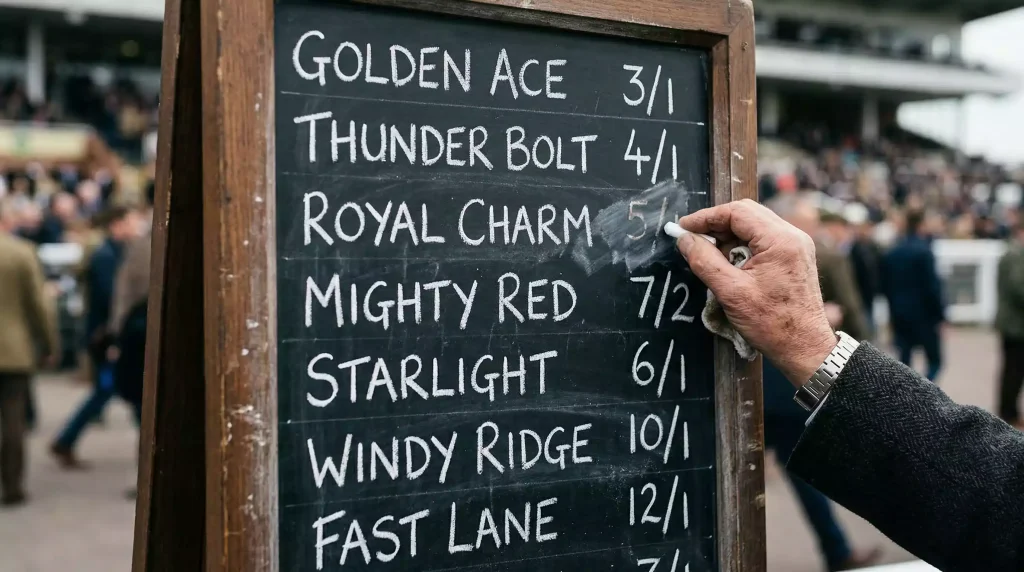
If you bet on horse racing in the UK long enough and win consistently enough, your bookmaker will restrict your account. This is not a conspiracy theory or a grievance from sore losers — it is a documented, data-confirmed practice that affects hundreds of thousands of accounts every year. Staking restrictions in UK betting are the industry’s open secret: widely experienced by punters, reluctantly acknowledged by operators, and now quantified by the regulator for the first time.
In 2024, Gambling Commission data showed that 4.31% of 15 million active betting accounts — 643,779 individual accounts — were subject to commercial staking restrictions. These were not restrictions imposed for responsible gambling reasons or anti-money-laundering compliance. They were restrictions applied by bookmakers for commercial reasons: the account was too profitable, or the betting pattern suggested the customer was sharper than the operator’s risk management was comfortable with.
Staking Restrictions in UK Betting — More on this topic at horse race winner.
What the Gambling Commission Data Shows
The 4.31% headline figure is the first official attempt to quantify a practice that punters have complained about for years. On its face, it suggests that roughly one in twenty-three accounts is restricted — a significant number, but one that still leaves the vast majority of bettors unaffected.
However, the Commission’s figure and the lived experience of regular punters diverge sharply. A Racing Post survey conducted in early 2025 found that 31.8% of respondents had been subjected to restrictions on one or more accounts within the previous year. When historical restrictions were included, the figure rose to 43.6%. The gap between the official 4.31% and the survey’s 31.8% is partly methodological — the Commission counted active accounts, while the Racing Post surveyed engaged, knowledgeable bettors who are more likely to be restricted — but it also reflects the difference between a regulatory snapshot and a punter’s cumulative experience across multiple bookmaker accounts.
The types of restriction vary. Some accounts are limited to trivially small stakes — pennies per bet, rendering the account functionally useless. Others are closed entirely, with outstanding balances refunded and no further bets accepted. Some operators restrict access to specific markets (horse racing but not football, for instance) or to specific bet types (singles but not accumulators). The common thread is that the customer’s ability to bet at meaningful stakes is curtailed without the customer having breached any rules or terms of service.
The financial context matters. Betting turnover on British horse racing has fallen for three consecutive years — down 8% year-on-year in 2024-25, and 19% compared to 2021-22. Bookmakers are protecting margins in a shrinking market, and restricting winning accounts is a direct way to do so. The customers most likely to be restricted are those who consistently beat the closing line — bettors whose pre-race prices outperform the Starting Price — because these are the customers who cost the bookmaker money over time.
Why Bookmakers Restrict Accounts
The bookmaker’s business model depends on a structural edge: the overround built into the odds ensures that, on average, the operator retains a margin on every race. That edge works against the majority of casual bettors. It does not work against a minority of skilled punters who identify value — horses whose true probability of winning exceeds the probability implied by the odds — and back them systematically.
These sharp bettors do not need to win every bet. They need to win slightly more often than the odds suggest, or at slightly better prices than the market’s “true” level. Over thousands of bets, that small edge compounds into a reliable profit — and a reliable cost for the bookmaker. Restricting these accounts is not about punishing winners. It is about removing a loss-making product line from the business.
The legal position is largely in the bookmaker’s favour. Under current UK gambling law, bookmakers are private businesses and can refuse or restrict custom for commercial reasons, provided they do not discriminate on protected characteristics. There is no statutory right to bet at any particular stake level. The Gambling Commission has acknowledged the issue and published the restriction data as part of a transparency initiative, but it has not mandated that bookmakers accept all bets from all customers.
Some within the industry argue that restrictions are counterproductive for racing specifically. Sharp bettors tend to wager on horse racing more frequently and at higher stakes than casual punters. Restricting them reduces the total volume of bets on racing, which in turn reduces the betting levy — the statutory charge that funds prize money, regulation, and the sport’s infrastructure. The argument is that bookmakers are optimising their own short-term margins at the expense of the sport’s long-term financial health.
Alternatives for Restricted Bettors
Bettors who have been restricted by traditional bookmakers have limited but real alternatives.
Betting exchanges are the most significant. Because exchanges match bettors against each other rather than against a bookmaker, there is no counterparty risk from the operator’s perspective and therefore no incentive to restrict winning accounts. A bettor who consistently profits on an exchange is taking money from other exchange users, not from the platform itself. The exchange earns its commission regardless of who wins. This structural neutrality makes exchanges the default destination for bettors who have been shut out of the bookmaker market.
The trade-off is that exchange liquidity is not infinite. On major races — the Gold Cup, the Grand National, Royal Ascot — exchange markets are deep and competitive, with prices that closely match or beat bookmaker odds. On a Tuesday afternoon at Catterick, the exchange market may be thin, with wide spreads and limited availability at the price you want. Restricted bettors migrating to exchanges must accept that their ability to bet at scale is constrained by the size of the opposing market, not by an operator’s risk policy.
Tote betting — pool betting through the UK Tote — is another option. Tote bets are pooled and dividends are calculated based on the total pool, so there is no individual account assessment. The downside is that Tote dividends are often lower than exchange or bookmaker SP, particularly on favourites, and the pool sizes on smaller races can produce volatile returns.
On-course betting with independent bookmakers remains an option for those attending race meetings. Racecourse bookmakers operate under different dynamics: they set their own odds, adjust them in real time based on liabilities, and generally accept bets from any customer at the advertised price. Restrictions on-course are rare, though stakes are limited by the bookmaker’s individual book. For punters who value the ability to bet freely at a fair price, the racecourse ring is still the closest approximation to an unrestricted market.
The Restriction Landscape Going Forward
Staking restrictions are unlikely to diminish. Bookmaker margins are under pressure from falling turnover, regulatory costs, and the potential for further tax changes. Restricting sharp accounts is a rational response to those pressures from the operator’s perspective, even if it damages the broader racing ecosystem. The punter’s response — diversifying across exchanges, pool betting, and on-course activity — is equally rational. Neither side is behaving irrationally. They are simply responding to the same economic pressures from opposite ends of the transaction.
See also Horse Racing on TV in the UK.
